A personal knowledge base where I bring the material and an AI agent does the
writing. I feed it articles, videos and my own raw thoughts; the agent turns them into wiki pages,
links everything together and keeps it all up to date. I browse the result in Obsidian like a map of what I know.
The idea
Most note-taking systems die the same way: saving things is easy, but keeping them organized,
linked and current is tedious, so the notes go stale and nobody reads them again. The work
that kills a second brain is exactly the work an AI agent is good at.
So I split the roles. The project follows the LLM Wiki pattern shared by
Andrej Karpathy: instead of searching raw documents every time (as classic RAG does), an agent
builds and maintains a lasting wiki of Markdown pages, so knowledge adds up instead of being
rediscovered.
What I do
- Choose what is worth keeping
- Write my thoughts freely, however messy
- Ask questions
- Decide the judgment calls
What the agent does
- Read and summarize every source
- Write and update all the wiki pages
- Link related pages in both directions
- Keep the index and the history log current
Three layers
The vault is a folder of Markdown files with three layers, each with a clear owner:
Raw · mine
Sources
Articles, transcripts, images and journal entries, exactly as they arrived. Never edited
afterwards: they are the source of truth.
→read by the agent
Wiki · the agent's
Knowledge
Every page written and maintained by the agent, cross-linked with Obsidian wikilinks.
areas/entities/concepts/sources/notes/index.mdlog.md
Schema · the rules
AGENTS.md
One file describes how the agent must behave: page templates, frontmatter, linking rules and
every workflow. It turns a general-purpose AI into a disciplined librarian.
A map of connected ideas
Because the agent links every page to the pages it relates to, the vault grows into a network
rather than a pile of notes. This is its real graph in Obsidian: each dot is a page, each line a
link the agent wrote, and the biggest dots are the hubs that many ideas lead back to.
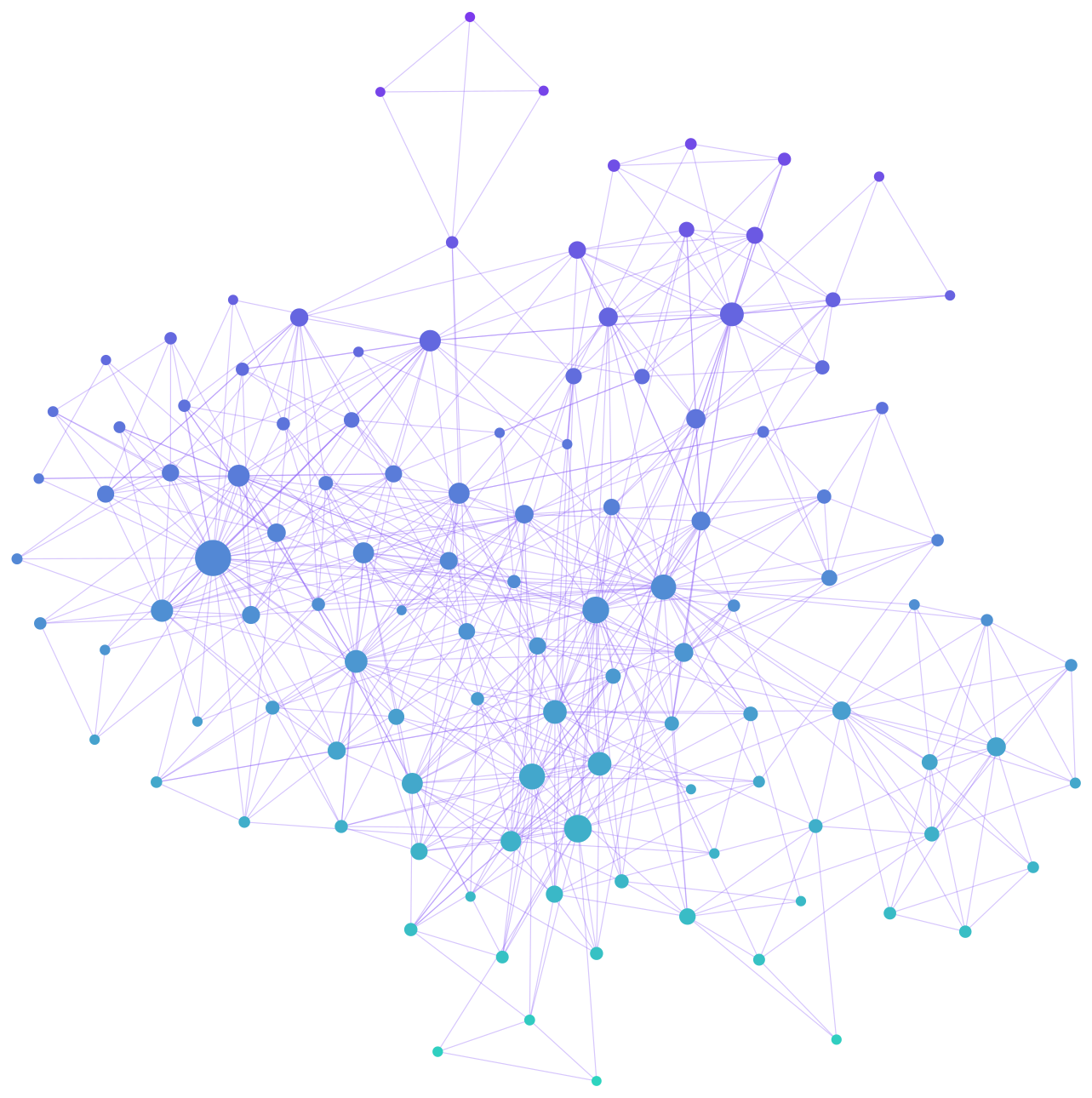
The vault's graph in September 2026, about three months in. Page names
are hidden to keep its content private.
How I use it
Ingestadd something new
- I clip an article with the Web Clipper extension, or write a thought
- We discuss the key takeaways first
- The agent writes a summary page
- It updates every related page
- Index and log updated, then a commit
Queryask a question
- The agent starts from the index
- It reads the relevant pages
- It answers with citations
- A good answer is filed back as a new note
Linta regular health check
- Contradictions never reconciled
- Claims made stale by newer sources
- Orphan pages and missing links
- Fixes the obvious, asks me about the rest
Philosophy
Sources never changeWhat came in stays as it came
in. Corrections and new understanding live in the wiki, never in the originals.
Changing my mind stays visibleWhen something new
contradicts an old page, the agent notes the contradiction instead of silently overwriting.
How my thinking evolves is the most valuable part.
Opinions are labelled as opinionsAnything that
comes from my own thoughts is marked as my view, with a date, so it never reads like an
established fact.
Stay in the loopThe agent discusses each source
with me before filing it, rather than quietly rewriting a dozen pages on its own.
Synthesize, don't transcribeShort pages that are
correct and current beat long pages that are stale.
Answers are worth keepingA good analysis should not
disappear into chat history: it becomes a page and feeds future questions.
No lock-inPlain Markdown and one vendor-neutral
rule file: any AI agent can take over tomorrow, and the notes outlive every tool.
Private by designThe vault lives in a private
repository and its browsing site only runs on my machine. This page describes the system,
never its content.
Tech stack
ObsidianReading and browsing, with the graph view and the
Extended Graph plugin to see how ideas connect.
Obsidian Web ClipperA Chromium browser extension: one
click saves the article I'm reading into the sources folder as clean Markdown, ready for
the agent to process.
AI coding agentsClaude Code, Gemini CLI or Codex. Each
reads the same AGENTS.md, through a tiny stub file when it expects another
name.
Markdown + YAML frontmatterEvery page has a type, an
area, tags, dates and the sources behind its claims.
Git + GitHubHistory of every change, and sync between my
machines: pull before working, push after.
QuartzA local website built from the vault, with search,
graph and backlinks in the browser.
Inspiration